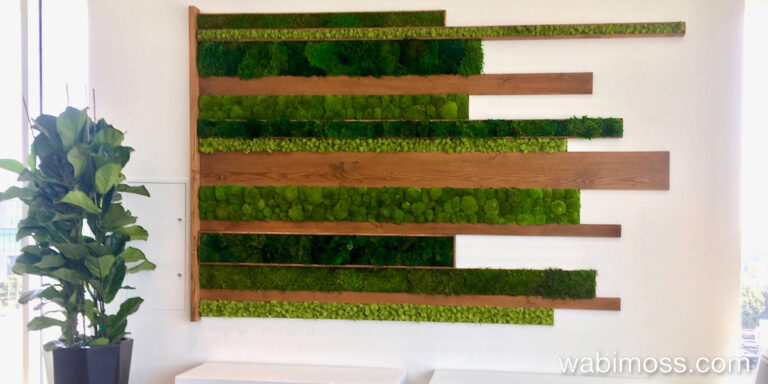
The Acoustic Benefits of Moss Wall Art
Moss walls aren’t just visually striking — they can also improve the acoustic comfort of a space. The soft, uneven surface of preserved moss helps absorb and diffuse sound, which can reduce echo and soften background noise in busy environments. While moss walls aren’t a replacement for professional acoustic panels, they can make a noticeable difference in how a room feels and sounds.
In offices, moss walls are often used to help calm open-plan workspaces, conference rooms, and collaborative areas where sound tends to bounce off hard surfaces. Restaurants and hotels benefit in a similar way, as moss art can help reduce the harshness of overlapping conversations while adding a warm, natural focal point. Even in residential spaces, moss walls can subtly improve acoustics in rooms with high ceilings, minimal furnishings, or lots of glass and wood.
One of the advantages of preserved moss is its dense yet lightweight structure. The moss’s natural texture traps sound waves rather than reflecting them, helping create a more balanced acoustic environment. Because the moss is preserved, it requires no watering, sunlight, or ongoing maintenance, making it a practical choice for spaces where live plants or mechanical sound treatments aren’t ideal.
Beyond sound absorption, moss wall art contributes to a calmer overall atmosphere. Natural materials have been shown to support focus and well-being, which is why moss walls are often paired with modern interior design and biophilic design principles. With custom shapes, panel layouts, and moss varieties, a moss wall can function as both an aesthetic statement and a subtle acoustic enhancement.
If you’d like to explore how moss wall art works, how long it lasts, and where it performs best, visit our Moss Art Learning Hub to learn more about moss wall art in real interior spaces.